
Modular construction is no longer a fringe concept – it’s quickly becoming the preferred way to build homes, multi-family units, and commercial properties across the United States.
At S²A Modular, we’ve watched this transformation firsthand. The modular construction industry is evolving today’s buildings into smarter, faster, more sustainable structures that outperform traditional site-built homes in quality, timeline, and long-term cost.
What Modern Modular Construction Really Means
Traditional construction is often costly, unpredictable, and slow. Weather delays, labor shortages, and supply chain issues all contribute to timelines stretching months or even years past initial estimates.
Modular construction flips this model on its head. Instead of building on the site piece by piece:
- 90% of construction happens indoors in a climate-controlled factory environment
- Modules are built simultaneously with site preparation
- Factory precision ensures consistent quality and fewer surprises
This means projects stay on schedule and on budget – giving builders and homeowners unprecedented certainty.
Faster Build Times = Faster Move-Ins (and Faster ROI)
One of modular construction’s biggest advantages is speed. When built traditionally, even a modest home project can take many months due to weather and trade dependency.
With modular:
- Factory and site work happen at the same time
- Build times can be reduced by up to 50% compared to traditional construction
- Homeowners and developers get to occupancy sooner
- Carrying costs and financing expenses shrink
At S²A Modular, our modular process is optimized from design to delivery – shortening timelines without sacrificing quality.
Quality Control You Can Trust
Indoor fabrication isn’t just about speed – it’s about consistency. In a factory:
- Materials are protected from moisture, wind, and sun
- Skilled teams use repeatable processes every day
- Multiple quality checks happen throughout the build
This precision often exceeds what’s achievable on a traditional job site and dramatically reduces costly rework.
Energy Independence Is Possible – Right from Day One
Modern modular homes aren’t only about structure – they integrate next-generation energy systems that redefine homeownership costs.
Many S²A Modular projects now include:
- Advanced solar systems and battery storage
- Net-zero energy performance
- Potential surplus energy income
These homes don’t just reduce utility bills – they can eliminate them entirely. Some homeowners may even produce enough energy to sell back to the grid, creating a long-term financial benefit.
Sustainability Built In – Not Added On
Modular construction inherently reduces waste and inefficiency, but S²A Modular goes further with:
- High-performance materials
- Low-waste production methods
- Integrated smart home energy technology
This means a smaller carbon footprint during production and reduced energy consumption over the lifetime of the building — a win for homeowners and the planet.
Meets Buyers Where They Are Right Now
Whether you’re:
- A first-time homeowner
- A developer building multi-family housing
- A city looking for scalable, sustainable solutions
Modular construction has become a viable and compelling alternative to traditional building methods.
At S²A Modular, we’ve combined the speed of modular construction with smart energy systems, luxury finishes, and lasting value – all backed by factory precision and modern design.
Ready to Explore Your Modular Options?
From luxury ADUs starting around $100K to net-zero apartment buildings, S²A Modular is building the future of housing today.
 We’re excited to share an important update from the S2A Modular MegaFactory.
Please join us in congratulating Gerardo Pizarro on his promotion to Plant Manager at our Patterson, California facility.
Gerardo brings more than 20 years of experience in offsite building components and modular production, with a background spanning residential, commercial, and multi-family construction across both wood and cold-formed steel (CFS) systems. His depth of knowledge in modular construction standards and factory operations has made him a key leader within S2A.
Since joining S2A Modular as Superintendent Assistant, Gerardo has led and managed all production operations at the Patterson factory. His responsibilities have included determining building and production requirements, managing production line flow and module movement, coordinating equipment and fabrication areas, and establishing strong quality control processes across multiple departments.
Gerardo is widely respected for his leadership style, problem-solving ability, and commitment to safety, quality, and team development. His comprehensive understanding of building systems allows him to quickly identify challenges and implement effective, innovative solutions that keep production moving efficiently and consistently.
As Plant Manager, Gerardo will continue to oversee factory operations while playing a key role in supporting S2A’s growth and long-term manufacturing strategy. This promotion reflects our commitment to developing leadership from within and recognizing individuals who consistently raise the bar for operational excellence.
“Gerardo has earned the respect of everyone he works with through his leadership, deep operational knowledge, and unwavering commitment to quality and safety,” said Brian Kuzdas, CEO of S2A Modular. “He has been instrumental in building the foundation of our Patterson MegaFactory operations, and his ability to lead teams, solve complex challenges, and drive consistent execution makes him the right person to take on this role. We’re excited to see Gerardo continue to elevate our manufacturing capabilities as we scale S2A for the future.”
– Brian Kuzdas, CEO, S2A Modular
We’re proud of Gerardo’s accomplishments and excited to see him step into this expanded role. Please join us in congratulating him on this well-deserved promotion.
The construction industry is at a breaking point.
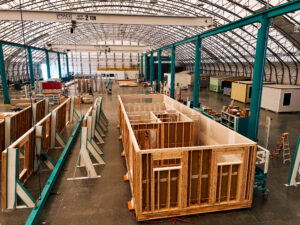 Rising labor shortages, unpredictable material costs, and long build timelines are forcing homeowners and developers to rethink how buildings are made. Traditional construction hasn’t evolved fast enough to match modern demand – but modular construction has.
In 2026, modular building is no longer an alternative approach. It’s becoming a smarter standard.
This guide compares modular vs traditional construction across cost, speed, quality, and long-term return on investment.
What Modular Construction Really Means
Modular construction is a factory-based process where the majority of a structure is built indoors before being delivered to the site for final installation. Instead of assembling everything outdoors under changing weather and labor conditions, the home is manufactured in a controlled environment with engineering precision.
At S2A Modular, homes, ADUs, multi-family projects, and commercial buildings are produced inside a high-performance MegaFactory. This environment allows tighter quality control, faster timelines, and greater efficiency than conventional job sites.
The result isn’t just faster construction – it’s a different way of thinking about how buildings should be made.
Build Speed: Why Timeline Matters More Than Ever
Traditional construction often stretches across 12 to 24 months. Permitting delays, weather interruptions, subcontractor scheduling conflicts, and material shortages can push projects far beyond their original timeline.
Modular construction changes the equation by allowing site preparation and factory production to happen at the same time. Because the majority of the build happens indoors, weather delays are eliminated and logistics are streamlined.
Most modular projects reduce overall timelines by 30-60%. That acceleration has real financial impact. Earlier completion means faster occupancy, faster rental income, and faster return on investment – a major advantage in high-demand markets.
Cost Efficiency Without Compromising Quality
 There’s a common misconception that modular construction is cheaper because quality is sacrificed. In reality, modular saves money by eliminating inefficiency, not standards.
Factory production reduces material waste, allows bulk purchasing, and minimizes unpredictable labor costs. Traditional construction projects often experience mid-build price escalations. Modular projects operate with tighter cost control and greater pricing transparency from the beginning.
For both homeowners and developers, predictability is one of the most valuable financial benefits of modular building.
Precision Manufacturing vs On-Site Variability
Traditional construction depends heavily on outdoor working conditions and individual crews. Quality can vary from site to site and even day to day.
Modular construction replaces variability with repeatable precision. Buildings are produced using engineering-grade measurements, factory inspections, and standardized quality systems. Controlled environments protect materials and ensure consistency throughout the process.
Factory-built does not mean lower quality. It means higher consistency and fewer unknowns.
Long-Term ROI and Property Value
Modern modular homes are built to meet or exceed local building codes and are appraised similarly to traditional homes. As modular adoption increases, resale perceptions continue to strengthen.
Owners benefit from faster move-in timelines, lower financing exposure, and reduced maintenance surprises. In strong housing markets, the ability to complete a project faster often has a direct impact on profitability and asset value.
The return isn’t just in construction savings – it’s in the lifecycle performance of the property.
Why Modular Construction Is Scaling in 2026
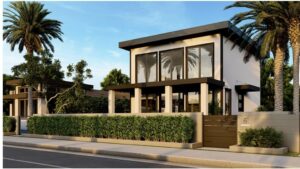 Several global forces are accelerating modular adoption. Cities facing housing shortages need faster, scalable solutions. Skilled labor gaps are widening. Environmental standards are tightening. Developers are under pressure to deliver projects faster without sacrificing quality.
Factory-built construction addresses all of these pressures simultaneously. It combines industrial efficiency with architectural flexibility, allowing builders to scale without losing craftsmanship.
What once felt experimental is now becoming infrastructure.
Who Modular Construction Serves Best
Modular construction supports a wide range of projects. Primary residences, ADU investments, multi-family developments, commercial spaces, and hospitality builds all benefit from accelerated timelines and controlled manufacturing.
Any project where speed, cost predictability, and quality consistency matter becomes a strong candidate for modular delivery.
The Smarter Build Strategy
Traditional construction isn’t disappearing – but it’s no longer the only benchmark. Modular construction represents an evolution in how buildings are designed, manufactured, and delivered.
Faster timelines, tighter cost control, and higher consistency are reshaping expectations across the industry. As demand for smarter housing grows, modular construction is positioned to lead the next era of development.
Ready to Explore What’s Possible?
If you’re considering a modular home, ADU, or development project, the first step is understanding what’s achievable for your property and timeline.
Explore S2A Modular floorplans, request pricing, or schedule a consultation to see how modular construction can work for you.
The FUTURE of building is already here.
Frequently Asked Questions About Modular Construction
Are modular homes cheaper than traditional homes?
Modular homes are often more cost-efficient because factory production reduces labor waste, material loss, and construction delays. While upfront pricing depends on size, design, and site preparation, modular projects typically maintain tighter budget control than traditional builds. The biggest savings often come from faster timelines and reduced financing exposure rather than lower quality materials.
How long does it take to build a modular home?
Most modular homes can be completed significantly faster than traditional construction. Because site preparation and factory manufacturing happen simultaneously, total build time is often reduced by 30-60%. While timelines vary by project scope and permitting, modular delivery eliminates many of the weather and scheduling delays common in on-site construction.
Are modular homes built to the same standards as traditional construction?
Yes. Modern modular homes are built to meet or exceed local and state building codes. Factory environments allow for consistent inspections, engineering precision, and controlled material handling. In many cases, modular construction produces tighter tolerances and stronger quality control than traditional outdoor job sites.
Do modular homes hold their value?
Modular homes appraise similarly to traditional site-built homes when constructed to residential building standards. As modular adoption increases, resale value perception continues to improve. Market demand, location, and design quality influence appreciation in the same way they do for conventional homes.
Can modular homes be customized?
Modular construction allows for extensive customization in layout, finishes, and architectural design. Buyers are not limited to standard templates. Many modular manufacturers, including S2A Modular, design homes to match specific property requirements, lifestyle needs, and investment goals.
Is modular construction only for small homes or ADUs?
No. Modular construction supports projects ranging from small ADUs to luxury residences, multi-family developments, commercial spaces, and hospitality buildings. The scalability of factory production makes it suitable for both individual homeowners and large-scale developers.
Why is modular construction becoming more popular?
Housing shortages, labor challenges, and rising construction costs are pushing the industry toward more efficient solutions. Modular construction offers faster delivery, predictable pricing, and consistent quality. These advantages make it increasingly attractive to homeowners, investors, and cities looking for scalable housing solutions.
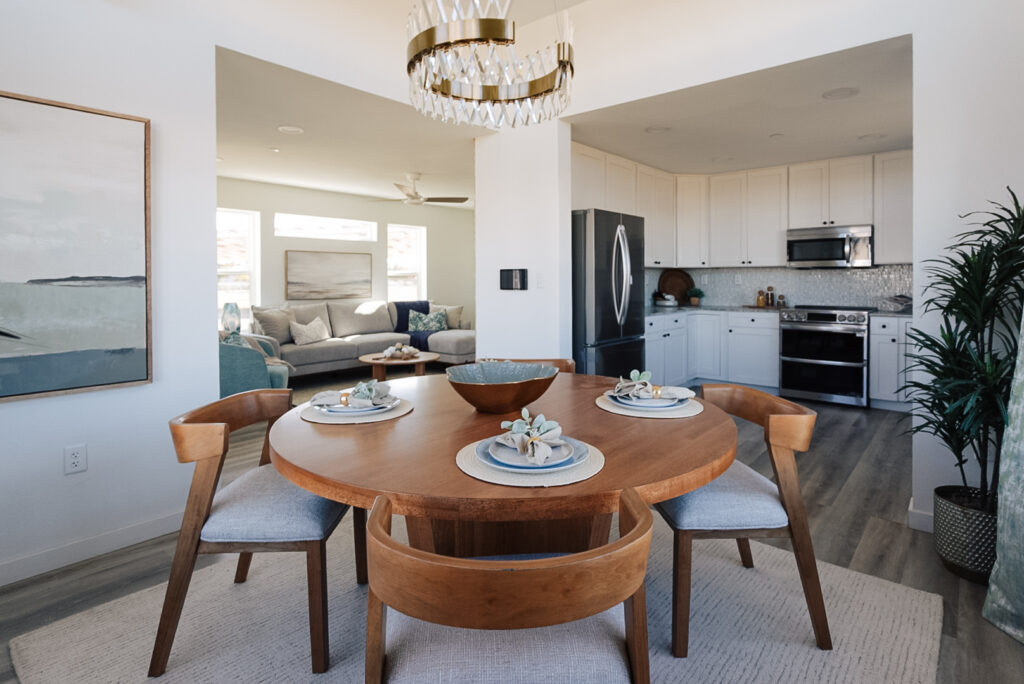 If you’re searching for luxury ADUs, modern modular ADUs, or affordable backyard homes that add value, comfort, and style to your property, S2A Modular’s GreenLux ADU collection delivers all of that – and more. With six pre-designed ADU floor plans starting around $100,000, homeowners now have access to energy-efficient, designer-grade living spaces without the long construction timelines or traditional build frustrations.
As ADUs surge in popularity across California and the U.S., homeowners want models that are beautiful, efficient, fast to build, and designed for real-life use. S2A Modular’s GreenLuxHomes are all of that – wrapped into one premium modular solution.
Each ADU is crafted with advanced, sustainable building methods and high-quality materials. That means:
- Faster build + installation
- Controlled factory precision
- Reduced site disruption
- Luxury finishes and modern layouts
- Greater long-term durability
It’s everything homeowners want in a backyard home – without the traditional construction headaches.
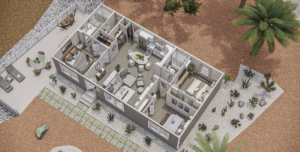
S2A currently offers six beautifully crafted GreenLuxHome ADU models ranging from 690-1200 sq. ft., ideal for rental units, guest suites, work-from-home spaces, multigenerational living, and more.
Each model offers unique design elements, smart use of space, and a modern aesthetic that complements today’s architectural trends. Whether you want a compact, efficient layout or a more spacious floor plan that feels like a second home, S2A has a model that fits your lifestyle and your land.
What truly sets S2A Modular apart is the ability to deliver a luxury living experience inside a compact, efficient footprint. Buyers consistently choose S2A for features like:
- Designer Interior Finishes
Premium cabinetry, stylish flooring, high-end fixtures, and open layouts create an upscale residential feel – not a “tiny home” vibe. - Energy-Efficient, Sustainable Construction
S2A’s GreenLux technology focuses on sustainability, long-term durability, and operational savings. - Full Kitchens, Real Bathrooms & Private Bedrooms
These ADUs live like a real home – perfect for guests, aging parents, or long-term rentals. - Smart Layouts That Maximize Every Sq. Ft.
From clever storage solutions to spacious living areas, each model feels larger than its footprint. - Turn-Key Modular Convenience
Factory-built precision reduces time, waste, and on-site delays – allowing faster delivery than traditional ADU construction.
Adding an ADU to your property can unlock significant value:
✔ Increase Property Value
Homes with ADUs sell for more and attract more buyers.
✔ Generate Rental Income
Long-term leases, Airbnb stays, student housing, traveling nurses – the options are endless.
✔ Create Comfortable Space for Family
A private suite for aging parents, young adults, or long-term guests.
✔ Add a High-End Office or Studio
Artists, remote workers, business owners – your productivity space is steps away.
With S2A’s luxury modular designs, you can enjoy all these benefits without spending $300K–$400K on a traditional build. The GreenLux series starting around $100,000 makes high-quality ADUs accessible to more homeowners.
>> S2A Modular vs. Traditional ADU Construction
| Feature | S2A Modular ADU | Traditional Build |
|---|---|---|
| Build Speed | Factory-built, faster timeline | Long construction time |
| Cost | Starting around $100K | Often 2–3× higher |
| Quality Control | Precision-built indoors | Weather-dependent, inconsistent |
| Design | Luxury GreenLux finishes | Varies by contractor |
| Sustainability | Energy-efficient, modern | Less consistent |
>> Ready to Explore Your ADU Options?
If you’re considering adding an ADU to your property – whether to increase value, create rental income, or expand your living options – S2A Modular makes it easy and exciting.
With six customizable luxury models, sustainable building practices, and pricing that starts around $100,000, there has never been a better time to reach out and start your ADU journey.
Ready to explore floor plans, pricing, or site requirements? Reach out to S2A Modular and speak with a specialist who can guide you through the process from concept to completion.
Your luxury ADU starts here.
S2AMODULAR.COM
Traditional on-site home building is often a long, frustrating process. Learn how modular construction has evolved to high quality homes and commercial buildings that meet and exceed codes.
Modular construction isn’t new-but the way it’s being used today? That’s a different story. What was once seen as a niche, boxy solution is now powering some of the most sustainable, scalable, and cost-efficient apartment buildings in the U.S.
In fact, the U.S. modular construction market is projected to nearly double from $25.6 billion in 2024 to $49.6 billion by 2033, driven by surging demand for faster builds, greener tech, and affordable housing that actually lasts.
So what exactly is modular construction-and why is everyone from urban planners to real estate developers paying attention?
For the developed world to advance its carbon reduction goals, building construction norms must be confronted and reimagined. That’s because the building industry is responsible for more than 35% of global annual emissions due to embodied carbon from construction. Houses are still largely built using technologies, materials, and methods from 40+ years ago, and the need for homes and residential buildings is higher than ever. The bottom line is that we cannot stop building as a quick fix to lower emissions.
The solution? Offsite manufacturing, where homes and other structures are built on a production line in a factory using innovative new techniques and materials to create substantial carbon savings in both embodied and operational carbon emissions.
Construction on build-to-rent (BTR) communities has nearly doubled in recent years which is why today’s builders should, and are in some cases, considering modular construction. Advantages including speed of construction, lower construction and financing costs, sustainability, energy-efficiency and green building practices are some of the key factors that should be considered for all BTR communities.
The path to enduring sustainability and net-zero emissions is full of challenges. Reducing carbon emissions and reaching net-zero will require a significant paradigm shift in building design, supply chain management, and manufacturing. S2A Modular is pioneering that transition in construction using innovative building materials, highly efficient modular structures, and green principles in a product-based approach.
According to Mckinsey & Company, the construction ecosystem accounts for approximately 25% of global greenhouse gas emissions. The main offenders are raw-material processing for buildings and infrastructure – the most significant being energy-intensive cement and steel production – closely followed by building usage, occupation, operations and inefficiencies like poor insulation.
S2A levels up its smart-connected home tech for luxury residences and commercial buildings with iLamp, the next-generation smart streetlight from Conflow Power Group. The solar-powered iLamp is packed with security, charging, communications features and uses surplus energy to generate revenue for S2A Modular homeowners, businesses and planned developments.
Imagine a solar-powered street lamp that generates enough power to light your street and charge your e-bike or scooter. It can use its onboard power generation to run systems that track severe weather, assist emergency response, enable Wi-Fi and other wireless communications – a wide variety of technologies that can work both on and off the grid. What began as a necessary but dull part of municipal infrastructure, the streetlight is becoming an exciting piece of tech that could improve community well-being and help people feel safer.