
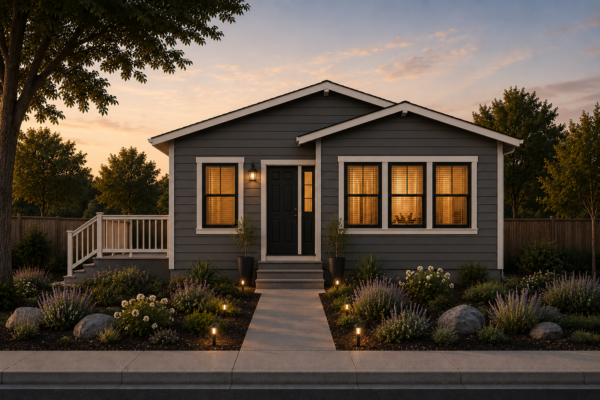
When comparing investment homes, the lowest purchase price does not always produce the strongest rental return. A home needs to fit its market, attract tenants, and operate within a sustainable budget.
Real estate investors should compare factory-built modular homes by evaluating total project cost, achievable rental income, operating expenses, occupancy assumptions, and the time required to begin leasing. S2A Modular gives investors a range of home designs to evaluate against those priorities, including Builder Series homes and ADU options. The strongest comparison connects the home you choose with the property where it will be built – and the renters it is intended to serve.
What Does Yield Mean for a Modular Home Investment?
Rental yield measures income relative to the cost or value of a property. Before comparing homes, establish which measure you are using and apply it consistently.
Gross Rental Yield
Gross rental yield compares annual rental income with the investment cost before operating expenses.
Gross rental yield = Annual rental income ÷ Total investment cost × 100
For a new modular home project, using total project cost provides a more useful development comparison than using the factory home price alone.
Net Rental Yield
Net rental yield accounts for operating expenses.
Net rental yield = Annual net operating income ÷ Total investment cost × 100
Net operating income generally means rental revenue after vacancy allowances and property operating expenses, before financing payments and income taxes. Keep your expense assumptions consistent across every option.
Cash-on-Cash Return
Investors using financing may also compare annual cash flow after debt payments with the cash they have invested.
Cash-on-cash return = Annual pre-tax cash flow after debt service ÷ Cash invested × 100
These measures answer different questions. Gross yield provides an initial comparison, while net yield and cash-on-cash return offer a closer look at operating performance and financing.
-
Compare the Complete Project Cost
A factory home quote is one part of the investment. When evaluating S2A Modular homes, build a project budget that identifies the home, selected options, and the work needed to complete it on your property. Depending on the project, that may include:
- Land acquisition or an allocated land cost
- Design, engineering, and permitting
- Site preparation and foundation construction
- Utility connections or upgrades
- Transportation, crane services, and installation
- Onsite completion and exterior improvements
- Financing and carrying costs during construction
- A project contingency
For an ADU on a property you already own, distinguish the return on the additional ADU investment from the return on the entire property. Those calculations use different cost bases. Compare every proposed home using the same scope. A lower quote may reflect fewer included services rather than a lower completed cost.
-
Match the S2A Modular Home to Local Rental Demand
The right investment home is the one that meets a documented need in its market. Review comparable rentals near the property. Look at bedroom count, size, condition, amenities, location, and how long listings remain available. Separate advertised rents from confirmed lease results whenever possible. Then compare S2A Modular floor plans against the needs of your intended tenants. Consider:
- Functional living and dining space
- Bedroom layout and privacy
- Storage and laundry arrangements
- Parking and outdoor access
- Ease of furnishing
- Maintenance requirements
- Features that tenants demonstrably value
A larger home or additional upgrade should have a clear purpose. Evaluate whether it supports higher rent, stronger tenant interest, or better long-term usability before adding it to the budget.
- Evaluate Operating Costs Alongside Rental Income
Two homes with the same monthly rent can produce different net returns.
Estimate the expenses associated with each completed property, including maintenance, insurance, property taxes, management, owner-paid utilities, and any applicable association costs. Include reasonable vacancy assumptions and reserves for future replacements. When reviewing a S2A Modular proposal, ask about the specified materials, systems, warranties, and maintenance requirements. Confirm which energy features are included in the selected package and who will pay the utility bills. Avoid assigning savings to a feature without supporting information. Use documented specifications and realistic local estimates to build your operating budget.
-
Compare the Time to Leasing
An investment property begins generating rent only after it is completed, approved for occupancy, and leased. Factory-built modular construction can allow home production and site preparation to progress at the same time. That overlap can support a more coordinated construction schedule when approvals, site work, and delivery planning are aligned.
For your S2A Modular project, discuss:
- Design and selection deadlines
- Current production availability
- Permitting and foundation readiness
- Utility preparation
- Delivery and installation requirements
- Remaining onsite work and inspections
- A realistic leasing period after completion
Schedule affects carrying costs and first-year cash flow. Keep those effects separate from stabilized annual yield so your comparison remains clear.
- Test the Investment Under Different Conditions
A useful comparison should show how each home performs when assumptions change. Evaluate a base case alongside scenarios with lower rent, longer vacancy, higher project costs, or delayed occupancy. If financing is involved, include the actual loan terms being considered. Use the same assumptions for comparable options unless there is evidence supporting a difference.
| Comparison Factor | What to Evaluate |
| Total project cost | Complete scope through a leasable property |
| Rental income | Relevant local rental comparisons |
| Operating expenses | Property-specific annual costs |
| Vacancy | Realistic allowance for unoccupied periods |
| Construction schedule | Full path through occupancy approval |
| Financing | Debt payments and cash required |
| Long-term upkeep | Maintenance and replacement needs |
This helps identify a home that remains workable beyond an optimistic forecast.
Why Compare S2A Modular Homes for Your Investment Strategy?
S2A Modular offers investors specific home designs to compare against their property, budget, and intended rental use. The Builder Series provides modern two-module floor plans with practical finish packages. S2A’s ADU collection provides additional options for investors exploring a second residence on an existing property, subject to site suitability and applicable requirements.
That choice allows investors to begin with the needs of the project and evaluate a suitable home around them.
Bring S2A Modular into your planning early to connect model selection with property feasibility, construction scope, and your rental strategy.
Frequently Asked Questions
Which factory-built modular home offers the highest rental yield?
There is no single model that produces the highest yield in every market. Yield depends on total project cost, achievable rent, occupancy, and operating expenses. Compare suitable S2A Modular models using property-specific numbers.
Should investors compare modular homes by price per square foot?
Price per square foot can help compare similar scopes, but it does not measure rental performance. Evaluate total completed cost and expected net income alongside size.
Can a modular ADU generate rental income?
An ADU may support rental income where the proposed use is permitted. Confirm property eligibility, rental requirements, total costs, and local demand before committing to a model.
Does faster construction automatically mean higher yield?
No. An earlier completion date may reduce carrying costs or allow leasing to begin sooner, but annual rental yield still depends on income, expenses, and investment cost.
How should investors begin comparing S2A Modular homes?
Share your property location, intended rental use, preferred size, target budget, and schedule with the S2A team. Request model information and a clearly defined scope, then evaluate the options using local rental and expense data.
Choose Your Next Investment Home With S2A Modular
A strong rental strategy starts with disciplined model selection. Compare the complete cost, evaluate the market, and choose a home that serves your tenants and your property goals. S2A Modular offers a factory-built approach and a range of designs to make that evaluation concrete.
Explore S2A Modular’s homes and speak with our team about the right starting point for your next rental property or ADU project.